
Episode 7
Shuly Xóchitl Cawood
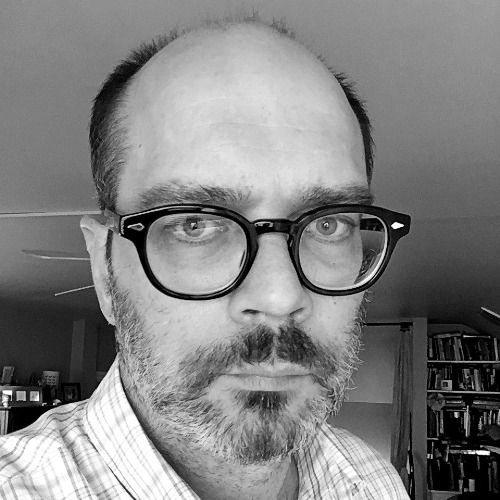
Shuly Xóchitl Cawood teaches writing workshops, doodles with Sharpies and acrylic paint, and is raising two poodles and a dwindling number of orchids. Her books include Something So Good It Can Never Be Enough (Press 53, 2023) and Trouble Can Be So Beautiful at the Beginning (Mercer University Press, 2021), winner of the Adrienne Bond Award for Poetry. Her work has been published in The New York Times, The Sun, and Rattle.
Links:
Shuly Xóchitl Cawood's website
"Poem in Which I Fail to Teach My Dog How to Fetch" at The Sun
Interview and four poems at Does It Have Pockets
Video: Cawood reading her poem "You Are Not a Cat"
Mentioned in this episode:
KnoxCountyLibrary.org
Thank you for listening and sharing this podcast. Explore life-changing resources and events, sign up for newsletters, follow us on social media, and more through our website, www.knoxcountylibrary.org.
Transcript
Welcome to The Beat. Today we’ll hear Shuly Xóchitl Cawood read four poems: “Places I Looked for You,” “Soft-Boiled Eggs on Any Morning,” “My Mother’s One Request,” and “Poem in Which I Fail to Teach My Dog How to Fetch.” The poems are from her book Something So Good It Can Never Be Enough.
Shuly Xóchitl Cawood:"Places I Looked for You"
after Natalie Kusz
In every airport, at the last gate, in a plastic chair, your head lowered, reading an article I might never understand, or writing one, having the terminology for everything but stay. On side streets, especially in rain, pedaling a bike, your yellow poncho flapping, like applause, like surprise, like a bloom defying gray. In any soybean field, between rows of yesterday and what might have been, standing in boots flecked with hard day’s dirt and the smear of regret. In every small city, in any blue truck or back bedroom tinged with the day’s last drunken light that can soften and forget. At night, in dreams, never the same one, but always we were young and we lay side by side like matchsticks in a box, ready for the troubled flame. And I don’t need to find you, not anymore, but I know I will see you just once—in a crowd, on a train, in a long line—and I wonder if I will know by then the language for I’m sorry, for goodbye.
"Soft-Boiled Eggs on Any Morning"
They say a watched pot never boils but I’ve stood over plenty and they always do if I wait long enough, which I was raised to do. To get an egg to turn soft-boiled—as opposed to hard—so the yolk can still leak out, not having toughened yet, you must start with eggs in cold water and heat them over flame in a pot gifted to you by the aunt who never liked you, maybe even never loved you, yet she gave you this pot which has endured your bad marriage, your bout with cancer, the death of your friend who took your hands in hers and said it’s time to dye your hair because she promised to tell you when the strands were too peppered, and though you no longer dye anything now that she is dead, you ache for her hands and for the smooth and scarless skin on your chest and for the way you once believed love was enough. Now you stand beside the stove and watch the water boil—it always does, it always will—and once this bath splashes against the sides of this silver, sturdy pot, you set the timer, two and a half minutes long and wait for it to be over. Anyone can wait those minutes. The eggs clink against each other. Steam rises toward your face and finds it.
"My Mother’s One Request"
I must have been fifteen when I made them the first time. Too skinny and standing by the stove. I had appointed myself family baker, and I kneaded, rolled, poured batter and dough into shapes everyone would want. My mother loved bread—pumpernickel loaves, cornmeal muffins, sourdough slices. But what she wanted most was my buttermilk rolls from a New York Times Natural Foods Cookbook, and whenever she asked, I slipped the apron over my head and tied it behind my back and pulled out ingredients: yeast & honey; buttermilk & butter; unbleached white flour, sea salt, baking soda. To do it right you had to let the dough rise twice before dividing it into twenty-four pieces and letting all of it rise again. Rising takes the kind of time you give knowing you won’t get it back. But I was sixteen and seventeen and did not understand these kinds of hours. My mother stood beside me at the stove when it was over, pinched a roll open. Steam loosened, floated free. For years my mother asked me to make her buttermilk rolls, and I did and then I didn’t, having tired of the recipe and its need for each long rise. But I can’t tell you how often I remember those rolls now, the way my mother savored each one, how she wanted each trayful to yield more than it did, and how I did not know—had no earthly idea—that something could be so good it could never be enough.
"Poem in Which I Fail to Teach My Dog How to Fetch"
I throw the tennis ball. She chases it, grabs it in her mouth, sprints as far from me as possible in our fenced-in yard. She plops down beneath a Leyland cypress. The day is filled with opposites: moist mulch and dry grass, broken branch and whole-hearted effort. Here, I call. I am using the sweet voice the vet psychiatrist told me to, not the hell no one I prefer. Here, I call again. I use the hand signal, my right palm facing me, beckoning from air to flat against my chest. In my left hand, a chicken-flavored treat. My dog holds the ball in her mouth, blinks at me. Uh-oh, I say. Uh-oh is our neutralizing word, the word the trainer said to use when the dog ignores your command. You’re not supposed to keep repeating the command or else the dog learns only to respond after the third or fourth of fifth time. Or in my case: never. Here, I say, do the hand signal, offer the treat. Who wants a treat? Already 1 have resorted to pleading. The day is long in light, short in reply. When my husband first brought her home, when she was fourteen weeks old, I was so overwhelmed by her wildness, whimpers, ignorance of rules that I had a meltdown on our corduroy couch. One day you'll love her, he said. How do you know, I asked. I know, he said, because I know you. He settled onto the couch beside me, held me in his arms. That saying about love being patient, I suppose it’s true. Here, I say, and the day, like any other, fills with light and shadow, weed and flower. Uh-oh, I say. Here, I say. She stares at me. You don’t always get a choice about what life brings, what it does not. She spots a squirrel, darts after it, leaves behind the ball that now no one will retrieve. There are a hundred lessons she must be trying to teach me, and I have hardly mastered one.
Alan May:You just heard Shuly Xóchitl Cawood read four poems from her twenty twenty-three book Something So Good It Can Never Be Enough, published by Press Fifty-Three. She was kind enough to record for us at her home in East Tennessee. Cawood earned an MFA in creative writing from Queens University of Charlotte. She’s the author of several books of poetry, fiction, and nonfiction. Her book Trouble Can Be So Beautiful at the Beginning won the Adrienne Bond Award for Poetry and was published by Mercer University Press in twenty twenty-one. Cawood’s flash essay collection, What the Fortune Teller Would Have Said, won the Iron Horse Literary Review Prose Chapbook Contest and was published in twenty twenty-two. Her work has appeared in The New York Times, The Sun, Rattle, and others. You can find books by Shuly Xóchitl Cawood in our online catalog. Also look for links in the show notes. Please join us next time for The Beat.