
Episode 6
Arlene Keizer's Poems for Beauford Delaney
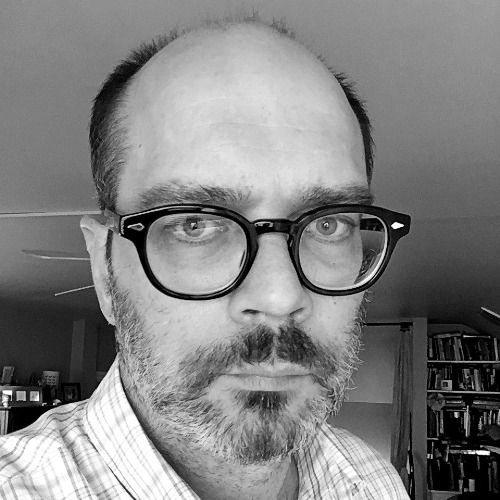
Arlene Keizer, an Afro-Caribbean American poet and scholar, writes about the literature, lived experience, theory, and visual culture of the African Diaspora. The recipient of an Academy of American Poets Prize, she later earned an MA in English and Creative Writing (Poetry) at Stanford University and a PhD at the University of California, Berkeley. She is the author of Black Subjects: Identity Formation in the Contemporary Narrative of Slavery (Cornell UP), and her poems and articles have appeared in African American Review, American Literature, The Kenyon Review, Obsidian: Literature and Arts in the African Diaspora, PMLA, Poem-a-Day, TriQuarterly, and other venues. Fraternal Light: On Painting While Black, her collection of poems about the African American painter Beauford Delaney, won the 2022 Stan and Tom Wick Poetry Prize and was published in 2023 by the Kent State University Press. She is a professor at Pratt Institute in Brooklyn, NY.
Links:
Arlene Keizer
Arlene Keizer’s page at Pratt Institute
Interview with Arlene Keizer at Speaking of Marvels
Fraternal Light: On Painting While Black at Kent State University Press
Beauford Delaney
Bio and artwork at Knoxville Museum of Art
Bio and Artwork at the Smithsonian
Bio and artwork at Studio Museum in Harlem
Artwork at Michael Rosenfeld Gallery
“Beauford Delaney in Knoxville” at Knoxville History Project
Mentioned in this episode:
KnoxCountyLibrary.org
Thank you for listening and sharing this podcast. Explore life-changing resources and events, sign up for newsletters, follow us on social media, and more through our website, www.knoxcountylibrary.org.
Transcript
Welcome to The Beat. Today, we’ll hear poet and scholar Arlene Keizer read from her book Fraternal Light: On Painting While Black, Poems for Beauford Delaney, published by Kent State University Press in twenty twenty-three. Keizer’s book centers around Beauford Delaney, the Modernist painter who was born in Knoxville in nineteen oh one and died in Paris in nineteen seventy-nine. In his early years, Delaney and his family lived in a house near downtown, and he later attended Austin High School. In his early twenties, with encouragement from Knoxville commercial artist Lloyd Branson, Delaney moved to Boston, which was a center of fine arts at the time. Delaney eventually became part of the Harlem Renaissance in the 1930s, and he was friends with influential writers and artists, including Henry Miller, James Baldwin, and Georgia O'Keeffe. Delaney moved to Paris in 1953, where he lived and painted until his death in 1979. During his lifetime, his work was lauded by other artists, but he often lived in obscurity and poverty, especially after his move to Paris. The poems Arlene Keizer will read for us today are titled “Terror in the Heart of Freedom,” “Paris Moods: Catalogue Raisonné,” “Black Canvas,” and “A Country Meter.”
Arlene Keizer:"Terror in the Heart of Freedom"
Nineteen nineteen, nineteen sixty-nine.
Knoxville is green and gold and black, with a red sun rising or a blood moon falling. Climate is to weather as langue is to parole, as color spectrum is to palette. Your talent has no limits except Vine Street/ Knoxville/ Tennessee/ Appalachia/ the South... The future arrived today: tongues of fire no longer prophesy but burn your literal house to the ground. Sound and color—you make your home out of what's immanent, knowing already what you’ll never own. Always there's the presence that watches, listens, smells, and judges. Eyes, ears, nose, and ego never wholly your own unless liberated by wine, or moonshine. Let's get real: what black man born before sixty-nine had a chance at freedom unassisted by sloe gin and reefer, the Invisible Man's two-fisted high? Certainly not you, terrified inside and out, your urges reign in your body like whites rule your lost hometown. Your father’s god--lord of mirth or mercy? Even now you can't be sure where the laughter comes from. How will you survive the journey away from everyone who loves you, and the predictable enemy? How did you survive? How did you weave a net to break your fall, find freedom in the heart of terror?
"Paris Moods: Catalogue Raisonné"
portrait of a man portrait of a man in green portrait of a man in sunlight portrait of a man in red portrait of a man in black the fall portrait of a man with petal background portrait of a man in soft light man in African dress self-portrait in a Paris bath house
"Black Canvas"
you would love this: a bole ready-made for melancholy works, those paintings, like your life, built up from dark to light the savings on paint alone would buy you a few more dinners with friends, a few more tubes of transparent gold and Naples yellow you might have used this black ground for night visions through high windows in Clamart and your rose madder portrait of Dante when you painted Greece--nothing but harbor, edge to edge--those blues would have rested upon an ocean bottom as matte and gritty as anthracite
"A Country Meter"
This poem begins with an epigraph from St. Augustine: "It is solved by walking."
Tramping away from Paris into the countryside, you’re seen as poor and odd, but not as prey. You’re too rare here to be a threat. No one offers you a ride either. Free to stroll and stride and commit colors to memory free to unpack easel and paint box in a fallow field, at liberty to set the sun in its rightful place. Swing low, golden eagle, golden double, coming for to carry me up in the middle of the air steal away steal away o pray my wings are gonna fit me well i ain’t got long to stay here Tramping this straight Roman road--slave-built imperial trace--you find that the voices can’t outsing you when you’re backed by a chorus of fraternal light.
Alan May:You just heard Arlene Keizer read four poems from her book Fraternal Light: On Painting While Black, Poems for Beauford Delaney. She was kind enough to record these poems for us at her home in Brooklyn, New York. Arlene Keizer is an Afro-Caribbean American poet and scholar. She writes about the literature, lived experience, theory, and visual culture of the African Diaspora. Keizer has won the Stan and Tom Wick Poetry Prize (for her book Fraternal Light) and the Academy of American Poets Prize. She's also the author of the book Black Subjects: Identity Formation in the Contemporary Narrative of Slavery, published by Cornell University Press, and her poems and articles have appeared in African American Review, American Literature, The Kenyon Review, Obsidian, PMLA, Poem-a-Day, TriQuarterly, and others. She earned an MA in English and Creative Writing at Stanford University and a PhD at the University of California, Berkeley. She teaches at the Pratt Institute in Brooklyn. You can find Arlene Keizer’s book Fraternal Light: On Painting While Black in our online catalog, along with other books about Beauford Delaney. If you’re in Knoxville, you can see some of Delaney’s work at the Knoxville Museum of Art. The show notes for this episode include links to images of Delaney’s paintings and much more about Arlene Keizer and her work. Please join us next time for The Beat.