
Episode 3
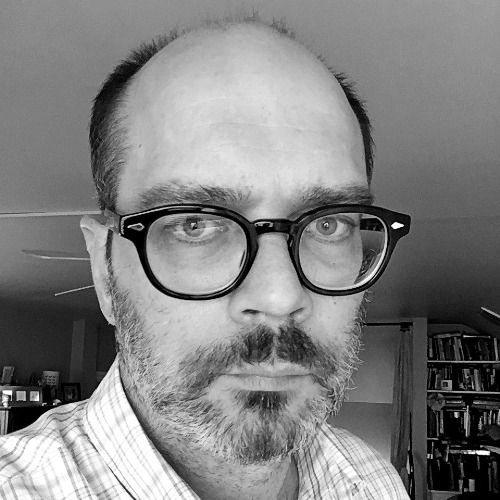
David Baker and Stanley Plumly
David Baker is a poet, educator, editor, and literary critic. His most recent books are Swift: New and Selected Poems, Whale Fall, and Transit. In 1984, he began teaching at Denison University, in Granville, Ohio, where he now serves as an emeritus professor. He has also taught in writing programs and writers’ workshops around the country, including the Hellbender Gathering of Poets, the Bread Loaf Writers Conference, the MFA program for writers at Warren Wilson College, and others. For many years he was Poetry Editor of The Kenyon Review.
Stanly Plumly was born in Barnesville, Ohio in 1939, and he grew up in Virginia and Ohio. He earned a BA from Wilmington College and a PhD from Ohio University. He published numerous books of poetry, and his work won the Delmore Schwartz Memorial Poetry Award, The Los Angeles Times Book Prize, the Paterson Poetry Prize, and eight Pushcart prizes. He taught at the University of Iowa, Princeton University, Columbia University, the University of Houston, and the University of Maryland. He was poet laureate of Maryland from 2009 to 2018.
Links:
David Baker
Bio and poems at The Poetry Foundation
"Rather Than Nothing: On David Baker’s Transit: Poems" at Literary Matters
A review of Transit in Publishers Weekly
Video: "David Baker--Great Writers, Great Readings", a reading at Hofstra University
Stanley Plumly
Bio and poems at The Poetry Foundation
Stanley Plumly Memorial Digital Archive at GR2
Video: "Poet Stanley Plumley Reads from His Collection Orphan Hours"--PBS News Hour
Transcript
Welcome to The Beat. Today we’ll hear David Baker read three of his poems, and he’ll follow with three poems by Stanley Plumly. David Baker is a poet, educator, editor, and literary critic. His most recent books are Swift: New and Selected Poems, Whale Fall, and Transit. In nineteen eighty-four, he began teaching at Denison University, in Granville, Ohio, where he's now an emeritus professor. He also taught in writing programs and writers’ workshops around the country, including the Hellbender Gathering of Poets, the Bread Loaf Writers Conference, the MFA program for writers at Warren Wilson College, and others. For many years he was Poetry Editor of The Kenyon Review. Here's David Baker reading three poems from his book Transit. The poems are “Late Georgic in a Field in Ohio,” “Six Notes,” and “The Bay.”
David Baker:"Late Georgic in a Field in Ohio"
Take my hand, she said, and I lay my palm on top of her hand and she knelt a little, I knelt beside her, and she waved gently, as with a wand, the small light she held like a pencil, tracing in the humming air a phosphorescent J. We were in clover, we were in jimson, in the field, we were in sedge grasses wet with the birthing of mid-evening. I have been a biologist all my life, she said, and I love this more than anything. J in the deep blue air, J J and the redwing blackbirds chipped from the cattails around the pond and a jet glided homebound or outbound in the low horizon. J she wrote, we wrote, and then a blink answered from its cave of curled grasses and another came toward us in a funny sort of dancing rise-and-fall, and I realized we were speaking, all of us, firefly and awkward human couple-not-a-couple, and the wonder was not that they answered us. The wonder was it dawned on us finally to ask.
"Six Notes"
Come down to us. Come down with your song, little wren. The world is in pieces. We must not say so. In the dark hours, in the nearest branches, I hear you thrum—
. . .
The deer come to die beside the creek. Mud the color of walnut stain. Reek and runoff from the new development, there, beyond the woods. Rib and skull. No jawbone—
. . .
It makes a soundless scream. I hope for peace when I walk here sometimes in the dark. If not peace, clarity. If not clarity, at least a place to breathe. Else I’ll scream, too—
. . .
Come down, little dove, far above the bay. I hear you in a thirsty palm or up beyond the rocks. A windy reed of song. Blue sun, blue cloud above the sweeping bay—
. . .
Sometimes we have to say so. I don’t know how. A man, a boy, an anger with no tongue took his automatic rifle to school today. The report we hear, discharge, echo—
. . .
is the sound of sorrow, reloading. No matter where we walk, we hear it call. Little wing, little creek, little bay, dark hour. Come down with your beaks of morning and blood—
"The Bay"
How many stories among the stars. The boats come in. The boats go out. Our friend is dying. He writes, he says, more often. Yet more sparely. Now to see what wasn’t seen before.
. . .
We stay up all night again to scan the sky from our deck above the bay. How slow the constellations spin. Invincible heroes. Unrequited loves—until, it seems, we’ve lost all count.
. . .
Soon we’ll go, too. Star, therefore, to start. A cargo freighter pulls across the waters. We can tell from the placement of the lights, the slow procession of it all. And so it’s dawn. Did I say invincible? I mean invisible.
Alan May:
You just heard David Baker read three poems from his book Transit, published in January by W.W. Norton and Company. He was kind enough to record for us at his home in Granville, OH. David Baker was good friends with the poet Stanley Plumly, and he also helped to edit the collected poems, which was published in August of last year. Here is David Baker reading “Rainbow,” “In Passing,” and “Beach” from Collected Poems of Stanley Plumly.
David Baker:"Rainbow"
Taking its time through each of the seven vertebrae of light the sun comes down. It is nineteen forty-nine. You stand in the doorway drying your hands. It is still summer, still raining. The evening is everywhere gold: windows, grass, the sun side of the trees. As if to speak to someone you look back into the dark of the house, call my name, go in. I know I am dreaming again. Still, it is raining and the sun is shining . . . You come back out into the doorway, shading your eyes. It looks as if the whole sky is going down on one wing. By now I have my hands above my eyes, listening.
"In Passing"
On the Canadian side, we're standing far enough away the Falls look like photography, the roar a radio. In the real rain, so vertical it fuses with the air, the boat below us is starting for the caves. Everyone on deck is dressed in black, braced for weather and crossing against the current of the river. They seem lost in the gorge dimensions of the place, then, in fog, in a moment, gone. In the Chekhov story, the lovers live in a cloud, above the sheer witness of a valley. They call it circumstance. They look up at the open wing of the sky, or they look down into the future. Death is a power like any other pull of the earth. The people in the raingear with the cameras want to see it from the inside, from behind, from the dark looking into the light. They want to take its picture, give it size—how much easier to get lost in the gradations of a large and yellow leaf drifting its good-bye down one side of the gorge. There is almost nothing that does not signal loneliness, then loveliness, then something connecting all we will become. All around us the luminous passage of the air, the flat, wet gold of the leaves. I will never love you more than at this moment, here in October, the new rain rising slowly from the river.
"Beach"
The end, I think, will be a little like looking down as far as I can see to where the wind has kicked up the tide and turned it all the same—sea, spume, the air. There might even be someone walking toward me, the way in the edge-of-the-ocean blue light they’ll be obscure until the last moment. I think it’ll be late afternoon, the sky that luminous oyster white into which things disappear. I’ll stop to look at the sky, and the moment I do I realize I’m alone, I misunderstood the figure coming toward me, which, considering the time of day, is as it should be, especially now that the wind has kicked up a little and the white sun has almost dropped under the soft gray almost stillness of the water, it seems just the right hour to be, again, alive.
Alan May:That was David Baker reading three poems from the book Collected Poems of Stanley Plumly, published by W.W. Norton and Company. Stanley Plumly was born in Barnesville, Ohio in nineteen thirty-nine, and he grew up in Virginia and Ohio. He earned a BA from Wilmington College and a PhD from Ohio University. He published numerous books of poetry, and his work won the Delmore Schwartz Memorial Poetry Award, The Los Angeles Times Book Prize, the Paterson Poetry Prize, and eight Pushcart prizes. He taught at the University of Iowa, Princeton University, Columbia University, the University of Houston, and the University of Maryland. He was poet laureate of Maryland from two thousand nine to twenty eighteen. He died in twenty nineteen. You can find books by David Baker and Stanley Plumly in our online catalog. Also, look for links to poems, videos, and reviews in the show notes. Please join us next time for The Beat.